
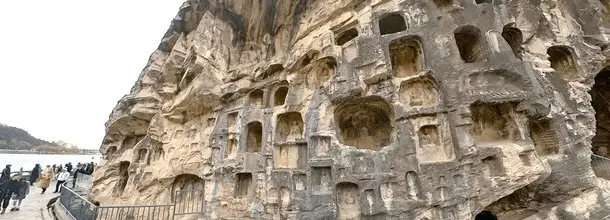
Philosopher Pindar: The Complete Odes #17/71
PYTHIAN 3
For Hieron of Syracuse
If it is right for my tongue to speak this communal prayer, | |
I would wish that the now dead Chiron,*son of Philyra | |
and wide-ruling scion of Cronus son of Uranus, were still alive, | |
and that he were still lord in Pelion’s valleys, | |
a wild untamed creature but with a heart that loved men— | |
just as he was when long ago | |
he reared that gentle deviser of limb-healing relief from pain, | |
Asclepius, the hero who protects men against every kind of disease. | |
Before the time had come for her to give birth to him | |
with the help of Eleithyia, attendant of mothers, | |
the daughter of Phlegyas*the horseman was brought low | |
in her bedchamber by the golden arrows of Artemis, | 10 |
and went down to Hades’ house by Apollo’s devising. | |
The anger of Zeus’ children is no slight thing. | |
Yet she in her mind’s folly had rebuffed him, | |
and had agreed without her father’s knowledge to another marriage, | |
though she had already lain with Phoebus of the unshorn hair | |
and was carrying the pure seed of the god. | |
She would not wait for the wedding feast to come, | |
nor the sound of the many-voiced bridal hymn | |
which a girl’s unwedded companions chant in affectionate evening songs;* | |
but she was infatuated with far-off things— | 20 |
a craving which many others have suffered. | |
There is among mankind a very foolish breed, who disdain familiar things | |
and look with longing at what is out of reach, | |
seeking the impossible with hopes that will never be fulfilled. | |
Such was the strong delusion which seized the mind of Coronis, | |
she of the lovely robes. She lay in the bed of an Arcadian stranger, | |
but she did not escape the one who watched her, | |
for though he was then in sheep-receiving Pytho | |
Loxias*lord of his temple was aware of her, | |
trusting in his omniscient mind, his unerring companion; | |
he has no truck with lies, and no mortal or god | |
can outwit him either in words or in deeds. | 30 |
And so now, when he realized her impious duplicity, | |
that she was bedded with the stranger Ischys son of Elatus, | |
he sent his sister, wild with resistless anger, to Lacereia | |
beside the steep shores of Boebias,*where the girl lived. | |
A contrary doom struck her down and hurled her into disaster, | |
and many of her neighbours suffered and died with her; | |
a fire that starts from one spark can destroy a great forest. | |
But when her relatives had laid the girl inside a wall of wood | |
and the ravening brightness of Hephaestus had enveloped her, | |
then Apollo spoke: | 40 |
‘I can no longer bear in my heart to destroy my own offspring | |
in a most pitiful death, together with his mother’s hard suffering.’ | |
So he spoke, and in one stride reached the pyre | |
and caught up the child from the corpse; | |
and the burning flames opened a way for him. | |
He took the child and gave him to the centaur of Magnesia | |
to teach him how to cure men of their painful infirmities. | |
And so if any came to him with chronic sores as constant companions, | |
or with limbs wounded by the grey bronze or a far-flung stone, | |
or whose body was wasted by summer fever or winter cold, | 50 |
he relieved them of their several pains and so restored them to health. | |
Some he treated with emollient incantations, others with potions, | |
and for others he applied salves all over their bodies, | |
while others he set back on their feet by surgery. | |
But even skill can become the prisoner of gain. | |
Gold displayed in the hand was a princely inducement | |
for even him to recall from death a man already in its grip. | |
The son of Cronus tore the breath from both in a moment, | |
and with his hands’ heave the blazing thunderbolt dealt them death. | |
Men should seek from the gods only what is consistent with mortal minds, | |
knowing what lies before our feet, and the nature of our destiny. | 60 |
Do not, my soul,*long for an immortal life, | |
but make the most of what you can realistically achieve. | |
If sagacious Chiron were still living in his cave, | |
and my sweet songs could somehow thrust a charm into his heart, | |
then I would surely have persuaded him | |
to grant us a healer of feverish diseases for mortals, | |
one named as a son of Leto’s child or of his father.* | |
And I would have come by ship, slicing through the Ionian sea, | |
to the spring of Arethusa*to see my guest-friend of Aetna, | |
who governs the Syracusans as king; one gentle to his fellow citizens, | 70 |
open-handed to the good, and a remarkable father to strangers. |
Leave Philosopher Pindar: The Complete Odes #17/71 to:

Best Posts From cashouts
We have not curated any of cashouts's posts yet. But you can encourage our curation team to review posts by visiting them regularly and by referring other readers. Because we give priority to frequently read content.
More Posts From cashouts
- Philosopher Pindar: The Complete Odes #17/71
- Philosopher Pindar: The Complete Odes #16/71
- Philosopher Pindar: The Complete Odes #15/71
- Philosopher Pindar: The Complete Odes #14/71
- Philosopher Pindar: The Complete Odes #13/71
- Philosopher Pindar: The Complete Odes #12/71
- Philosopher Pindar: The Complete Odes #11/71
- Philosopher Pindar: The Complete Odes #10/71
- Philosopher Pindar: The Complete Odes #9/71
- Philosopher Pindar: The Complete Odes #8/71