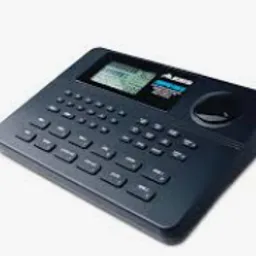
Kawai R-50E Drum Machine Sample set
In the pantheon of 1980s drum machines, certain names have achieved iconic status—the LinnDrum, the Roland TR-808, and the Oberheim DMX are often rightfully celebrated for their foundational roles in shaping modern music. However, nestled among these giants is a machine that, despite a more humble pedigree, carved out its own sonic niche and became the secret weapon for an entire genre. This is the story of the Kawai R-50e, a budget-friendly digital drum machine from the late '80s whose 12-bit charm and distinctly aggressive samples would go on to define the sound of industrial and EBM music .
Released in 1988, the R-50e arrived as a scaled-down, more affordable sibling to Kawai's earlier R-100 drum machine . On paper, its specifications seemed unremarkable, even for their time. It featured 24 sounds, stored as 12-bit samples at a 32kHz sampling rate, assignable to 10 rubber pads . It offered 50 preset and 50 user-programmable patterns, which could be chained into songs . Unlike its bigger brother, the R-100, the R-50e's pads were not velocity-sensitive. Instead, dynamics were handled by a dedicated "Accent" pad, a quirk that was a clear compromise to hit that attractive £325 price point . It also featured built-in effects, though these were limited to delay and flanger, with the notable absence of reverb being a missed opportunity for a more polished sound .
But specifications and compromises are soon forgotten; what endures is the character of the sound. And the Kawai R-50e had character in spades. The use of 12-bit sampling, with its inherent low-level noise and crunchy grain, didn't sound like a flaw; it sounded like a feature . While the standard R-50 offered a palette of more acoustic-sounding drums and percussion, the R-50e was where things got interesting. Its sound list read like a checklist for the burgeoning industrial scene: Electronic, Room, Acoustic, and Atomic Snares; Electric, Room, and Reverb Toms; and, most importantly, sounds that transcended typical drum machines, like "Mellow & Funk Bass Guitar," "Orchestra Hit," and "Brass Hit" . It was this unique blend of punchy, electronic drums and quirky, almost gimmicky, samples that gave the R-50e its enduring personality.
It is this specific sonic arsenal that cemented the R-50e's legacy. While many drum machines of the era sought to replicate acoustic kits with increasing fidelity, the R-50e leaned into its synthetic nature. Its sounds were big, aggressive, and unapologetically artificial, making them a perfect match for the pounding rhythms and stark aesthetics of the industrial and EBM scenes that were flourishing in the late '80s and early '90s . The machine is widely credited as being the engine behind the Wax Trax! Records sound, the legendary label that championed bands like Ministry and Front 242. The heavy, gated-reverb snares and punchy kicks found on countless records from that era are, in large part, the sounds of the R-50e . As one enthusiast noted, it is "the machine that built the Wax Trax-era industrial drums," a testament to its foundational role in shaping the sonic identity of a movement .
Despite its cult status, the R-50e remained a relatively affordable piece of vintage gear for years, often overlooked by those chasing the more famous names. Its interface, while functional, was noted for being somewhat unintuitive, with menu-diving required for deeper editing . The memory was also quite limited, capable of storing only a modest number of events per pattern . But for those in the know, these were minor hurdles in exchange for that sound. You could program a thumping beat, assign the "Funk Bass" sample to a pad for a grinding low-end stab, and layer in an "Orchestra Hit" for dramatic effect, all while the machine's inherent crunchiness gave the track a cohesive, gritty glue.
The machine has also found its way into the hands of rock royalty. In 2024, a Kawai R-50e, complete with its original box and manual, was sold at auction. It had belonged to Bernie Marsden, the legendary guitarist and co-writer of the Whitesnake classic "Here I Go Again" . The sale of Marsden's personal unit serves as a fascinating footnote, highlighting that the R-50e's appeal wasn't limited to the cold, electronic corridors of industrial music, but could also find a place in the toolkit of a blues-rock icon, perhaps for songwriting demos or exploring new textural ideas.
Today, the legacy of the Kawai R-50e continues. Its sounds have been meticulously sampled and repackaged for modern producers, appearing in sample packs on platforms like Splice, ensuring that a new generation can access that classic 12-bit industrial punch without needing to track down and maintain a 30-year-old piece of hardware . When producers discuss the "Wax Trax sound" or seek that perfect aggressive snare, they are, often without knowing it, chasing the ghost of the R-50e. It stands as a perfect example of how limitations can breed creativity, and how a machine built to a budget, with its specific set of sounds and quirks, can transcend its origins to become an indispensable tool, defining the sound of an era and continuing to inspire decades later.
Leave Kawai R-50E Drum Machine Sample set to:

Best Posts From sequentialvibe
We have not curated any of sequentialvibe's posts yet. But you can encourage our curation team to review posts by visiting them regularly and by referring other readers. Because we give priority to frequently read content.
More Posts From sequentialvibe
- Smoky Maple Roasted Veggie & Chickpea Bowl
- The power of kombucha for healing
- The Great Synthesizer Shift: How the 80s Traded Warmth for Glass and Changed Music Forever
- Horror Weapon LIVE 24/7 | Dark Industrial Music • Aggrotech • Cyberpunk Music
- Horror Weapon - Mind Override (Maxi Single) (Full Album) (16:17)
- Horror Weapon - Destroyer of Worlds (Industrial)
- Horror Weapon - Multi-Million Don't Care (Full Album) (Dark Techno) (39:40)
- Bad Deal For Me - Bad Deal For Me (Full Album) (Grunge Rock) (35:28)
- Horror Weapon - Cyber Strike (Industrial)
- Horror Weapon - Misery Magnet (Dark Techno)