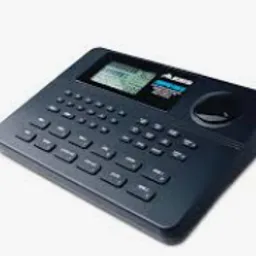
Akai MPC-1000 Wave File Sample Set
Over 100 studio quality wave file samples
The Akai MPC1000 is widely regarded as one of the most influential standalone music production tools of the 2000s, bridging the gap between classic hardware beat machines and the modern workflow expectations of digital producers. Released in 2003 by Akai Professional, the MPC1000 continued the legacy established by earlier machines in the MPC series, particularly the iconic Akai MPC2000XL, while introducing a more compact form factor and a workflow designed for both studio and portable use. For many producers, it represented the moment when the MPC platform became both accessible and powerful enough to serve as the centerpiece of a home studio.
At its core, the MPC1000 is a hardware sampler and MIDI sequencer built around the concept of tactile beat creation. The device features sixteen velocity-sensitive rubber pads that allow musicians to trigger samples in real time, giving the instrument a drum-like feel that makes rhythm programming intuitive and expressive. These pads are arranged in a four-by-four grid, a layout that has become synonymous with the MPC line and has influenced countless controllers and software interfaces since. Producers typically load drum hits, melodic snippets, or chopped segments of songs into the machine’s memory and assign them to the pads, allowing complex compositions to be built from small pieces of audio.
Sampling is central to the MPC1000’s creative workflow. Users can record audio through the device’s inputs or import samples from external storage, then trim, normalize, and manipulate them within the machine’s editing tools. This approach reflects the sampling traditions that shaped genres such as hip-hop, electronic music, and experimental beat production. By slicing longer recordings into individual segments, producers can rearrange musical phrases into entirely new compositions. The MPC1000’s sequencer then allows these sounds to be organized into patterns and songs with precise timing control, giving musicians the ability to craft layered rhythmic structures and evolving arrangements.
Despite its relatively small size compared to earlier MPC units, the MPC1000 retains the deep sequencing capabilities that made the series famous. The internal sequencer can handle multiple tracks, allowing drum parts, bass lines, melodies, and external MIDI instruments to be programmed together. Quantization tools help align performances to a rhythmic grid while still preserving the subtle timing variations that give grooves their character. Many producers deliberately adjust swing settings to create the laid-back rhythmic feel that has become a hallmark of MPC-based beatmaking.
Another defining aspect of the MPC1000 is its connectivity and integration with other equipment. The machine includes MIDI inputs and outputs, enabling it to control synthesizers, drum machines, and other external gear. In many setups, the MPC1000 functions as the central brain of a hardware studio, sending timing and performance data to multiple instruments simultaneously. This capability makes it appealing not only to hip-hop producers but also to electronic musicians who rely on hardware sequencing to structure live performances.
One of the most significant developments in the MPC1000’s history came from the independent developer known as Andy Averill, who created the alternative operating system JJOS. This third-party firmware dramatically expanded the machine’s capabilities, adding advanced sample editing, improved sequencing features, and a more flexible workflow. For many users, installing JJOS transformed the MPC1000 from a capable sampler into a deeply customizable production platform. The popularity of this alternative system highlights how the MPC community has played an active role in shaping the evolution of the hardware.
The design of the MPC1000 also reflects a shift toward portability in music production. Earlier MPC models were larger and heavier, often intended to remain permanently in studio environments. By contrast, the MPC1000’s compact chassis made it easier for musicians to transport the device between studios, rehearsal spaces, and live venues. Combined with removable storage and expanded memory options, the machine allowed producers to carry entire libraries of sounds and unfinished projects wherever they went.
Over time, the MPC1000 has developed a reputation for its distinctive workflow rather than any single technical feature. Many producers emphasize that the machine encourages creativity through limitation: the interface is focused, the screen is relatively simple, and the act of physically striking pads to trigger sounds fosters a direct connection between performer and instrument. This tactile approach contrasts with the mouse-driven workflow of many digital audio workstations, and it continues to attract musicians who prefer hardware-centered production.
The influence of the MPC1000 extends beyond its own lifespan. Numerous modern controllers and software instruments replicate its pad layout and sequencing style, reflecting the broader cultural impact of the MPC tradition. Even newer standalone devices from Akai Professional draw inspiration from the workflow that machines like the MPC1000 helped popularize. For producers who grew up with the instrument, it represents not only a piece of technology but also a particular philosophy of music creation built around sampling, rhythm, and hands-on performance.
More than two decades after its introduction, the MPC1000 remains a beloved tool among beatmakers, collectors, and live performers. Its enduring appeal lies in the balance it strikes between flexibility and simplicity: powerful enough to build complete songs yet focused enough to keep the creative process immediate. In an era where music production is often dominated by software, the MPC1000 continues to demonstrate the lasting value of dedicated hardware designed around the physical act of making beats.
Link to download: https://horrorweapon.gumroad.com/l/AkaiMPC-1000
Leave Akai MPC-1000 Wave File Sample Set to:

Best Posts From sequentialvibe
We have not curated any of sequentialvibe's posts yet. But you can encourage our curation team to review posts by visiting them regularly and by referring other readers. Because we give priority to frequently read content.
More Posts From sequentialvibe
- Smoky Maple Roasted Veggie & Chickpea Bowl
- The power of kombucha for healing
- The Great Synthesizer Shift: How the 80s Traded Warmth for Glass and Changed Music Forever
- Horror Weapon LIVE 24/7 | Dark Industrial Music • Aggrotech • Cyberpunk Music
- Horror Weapon - Mind Override (Maxi Single) (Full Album) (16:17)
- Horror Weapon - Destroyer of Worlds (Industrial)
- Horror Weapon - Multi-Million Don't Care (Full Album) (Dark Techno) (39:40)
- Bad Deal For Me - Bad Deal For Me (Full Album) (Grunge Rock) (35:28)
- Horror Weapon - Cyber Strike (Industrial)
- Horror Weapon - Misery Magnet (Dark Techno)