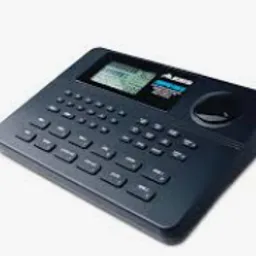
A Nostalgic Look Back: The Yamaha DX7 Retrospective
Let's be real, the Yamaha DX7 wasn't just a synthesizer; it was a revolution. It dropped like a bomb in 1983, and suddenly, every other synth on the market felt like a quaint antique. The '80s music landscape was forever changed, and for better or worse, its DNA is woven into the very fabric of that decade's sound.
When you first saw a DX7, you probably thought, "What the heck is this?" It was a black box with a sea of membrane buttons and a tiny, two-line LCD screen. It looked more like a VCR than a musical instrument. And then you tried to program it. Oh, the joy and frustration of programming the DX7.
This wasn't your father's subtractive synth. No knobs to twist, no faders to slide. Just a cursor and a data entry slider. You had to navigate a cryptic menu system to edit parameters like "E.G. Rate" and "Algorithm." It was an alien world of "operators," "carriers," and "modulators." It was intimidating, to say the least. Most people just gave up and stuck with the presets.
And those presets! We all know them. "E. PIANO 1" was everywhere. It was in power ballads, movie scores, and probably every single radio jingle from 1984 to 1990. "BASS 1" was the go-to for funky pop tracks. "TUB BELLS" was that crystalline, slightly eerie sound that defined so many film soundtracks. These sounds were so ubiquitous they became clichéd, but back then, they were fresh and new. They had a glassy, digital sheen that no analog synth could touch.
The DX7 was a double-edged sword. On one hand, it brought powerful, innovative FM synthesis to the masses. It was also ridiculously affordable for what it offered. On the other hand, it was notoriously difficult to program. You needed a degree in sound engineering to really unlock its potential. This led to a huge aftermarket of sound designers and companies selling new patches. If you wanted to get beyond the presets, you bought a bunch of those tiny RAM cartridges and hoped for the best.
Despite its quirks, the DX7 was a bona fide hit. It sold hundreds of thousands of units and cemented Yamaha's place as a dominant force in the synthesizer world. It was a staple in studios all over the world, from pop artists like a-ha and Brian Eno to film composers like Michael Kamen and Harold Faltermeyer.
Today, the DX7 has a different kind of reputation. It's an icon, a relic of a bygone era. We've got plugins and software that emulate its sound and are way easier to use. Yet, there's still something magical about the real thing. That tactile experience of those membrane buttons, the slightly clunky feel of the keyboard, and the surprisingly deep sound engine that still holds up.
The Yamaha DX7 wasn't just a synth. It was an adventure. It was a challenge. It was a defining sound of the 1980s. And for those of us who remember it, it's a nostalgic trip down memory lane, full of cheesy ballads, digital bells, and the frustration of trying to find the "Algorithm" button. It was weird, it was difficult, and it was glorious.
Leave A Nostalgic Look Back: The Yamaha DX7 Retrospective to:

Best Posts From sequentialvibe
We have not curated any of sequentialvibe's posts yet. But you can encourage our curation team to review posts by visiting them regularly and by referring other readers. Because we give priority to frequently read content.
More Posts From sequentialvibe
- Smoky Maple Roasted Veggie & Chickpea Bowl
- The power of kombucha for healing
- The Great Synthesizer Shift: How the 80s Traded Warmth for Glass and Changed Music Forever
- Horror Weapon LIVE 24/7 | Dark Industrial Music • Aggrotech • Cyberpunk Music
- Horror Weapon - Mind Override (Maxi Single) (Full Album) (16:17)
- Horror Weapon - Destroyer of Worlds (Industrial)
- Horror Weapon - Multi-Million Don't Care (Full Album) (Dark Techno) (39:40)
- Bad Deal For Me - Bad Deal For Me (Full Album) (Grunge Rock) (35:28)
- Horror Weapon - Cyber Strike (Industrial)
- Horror Weapon - Misery Magnet (Dark Techno)